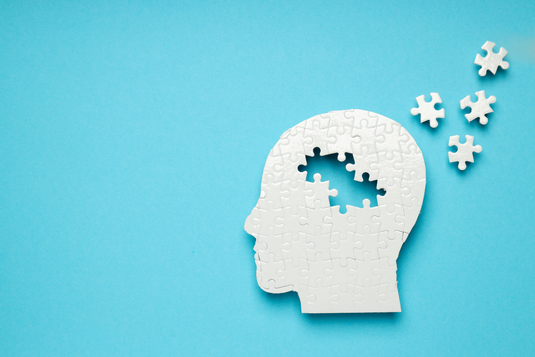
How is Alzheimer's or dementia diagnosed? This is most often when forgetfulness begins to occur frequently. The type of forgetfulness plays an important role in the diagnostic process. Is a person simply forgetting where they left their keys, or are they beginning to lose memories of events, people, and moments in their life that were previously clear and accessible?
Many people start to fear they are developing Alzheimer's when they experience short-term or even long-term memory loss. But are these really the first signs of Alzheimer's and dementia? Are they signs of the disease at all? Could there have been earlier signals that went unnoticed?
In the hectic pace of everyday life, everyone has the right to be distracted. It is normal to not remember everything. A lot depends on the nature of the work, the number of commitments made, the amount of brain energy used, and how emotionally and mentally engaged a person is with events in their life, which can be exhausting.
Sometimes, however, it is not a simple forgetfulness caused by overload. There are cases in which life seems to be in order – there is a routine, stability, calmness – and yet confusion, gaps in the calendar, forgetting specific events begin to appear. The person himself or his loved ones feel that something unusual is clearly happening. Some people experience episodes of delusions, absence or a real loss of sense of time. These symptoms can appear and disappear for years – with long periods without complaints, followed by sudden and disorienting experiences.
Often, a person visits a doctor at the recommendation of a relative or friend who has noticed unusual behavior. At first, the doctor may not be sure if there is a problem at all. However, when symptoms begin to occur more frequently, a diagnosis of Alzheimer's or dementia is usually made.
What does this really mean? What is the true diagnosis of Alzheimer's or dementia? The truth is, it's a gray area related to the gray matter of the brain. Doctors often rely on brain imaging tests, such as MRIs, looking for what they consider to be inconsistencies in the images. If a person is becoming increasingly absent-minded, their personality is changing in unusual ways, they are experiencing changes in mood, attitude, or behavior that are worrying to others, and at the same time, an inconsistency is found on the scan, they may be diagnosed with early Alzheimer's or dementia.
Only in certain cases, however, is there really anything unusual seen on a brain scan. Furthermore, the kind of discrepancy that is found in a person with memory loss can also occur in a person who is not forgetful at all. In the vast majority of Alzheimer's diagnoses, there is nothing clearly discernible on the brain image. The diagnosis is often based on theories and assumptions. The doctor may consult with colleagues in his medical practice and together they come to the conclusion that Alzheimer's or another form of dementia is developing.
The common picture that is presented about Alzheimer’s and dementia is that medical science fully understands them and that the only thing missing is a cure. But if the disease is fully understood, why is there still no cure? How can a disease be fully understood without a known antidote? This actually shows that Alzheimer’s and dementia are far from fully understood. If the medical community truly understood them, they would already have the answers. The same is true for any chronic disease.
The Healer Medium's Answers to Alzheimer's and Dementia
When someone diagnosed with Alzheimer’s benefits from a change in diet or from taking certain supplements, that doesn’t mean the disease is understood, even if a medical professional or expert in the field thinks they’ve found a way to temporarily slow the progression of the disease. We might talk about things like “improving gut health” or “the best foods for the brain,” encourage someone to give up their old lifestyle and diet or start taking supplements and notice a slight improvement in memory, as well as a temporary relief from confusion and brain fog , but even then, that doesn’t mean Alzheimer’s is understood or explained on any level.
Both alternative and conventional medicine remain in complete ignorance regarding the true nature of Alzheimer's. What medical professionals actually see on brain scans and what it actually means for brain processes remains a mystery to them.
And this mystery will continue to exist. Millions of people will continue to be diagnosed with Alzheimer's and dementia without real answers for many years to come, because real answers are not convenient for the medical industry. They threaten its very foundations. And so this misconception will continue. The misconception that the medical community knows what Alzheimer's and dementia are, how to properly diagnose them, how these diseases work, and that the only thing missing is a cure.
The fact that some patients show improvement with dietary changes gives alternative and conventional medical professionals the feeling that they are close to solving the problem in the brain and body. In reality, they do not realize that they are facing a wall that prevents them from reaching true knowledge.
Why are the answers to Alzheimer’s and dementia so frightening to the medical industry? Because part of the cause of these diseases comes from the industry itself. When the so-called “answer” to Alzheimer’s appears, it will not be the truth. It will be another fallacy. Because the truth – the very inconvenient and frightening truth – is that Alzheimer’s is a buildup of toxic heavy metals in the brain. Many of these metals enter the body through medical procedures at a very young age, including in infancy, or are inherited through the bloodline as a result of old medical practices that previous generations were subjected to. You can read more about this in the article “Pests That Make Us Sick – Toxic Heavy Metals” .
Specifically, Alzheimer's and dementia are associated with mercury accumulation, with sufficient aluminum also present in the brain to create conditions for the development of these diseases.
These toxic heavy metals, which over time build up in the brain, can cause very early warning signs as early as childhood or early adulthood. The problem is that no one recognizes these symptoms as possible signals that one day, far in the future, the person may lose their memory, forget who they are, not recognize their loved ones, and lose their ability to function independently.
These early precursors to memory loss are almost never noticed. The reason is that the medical industry is forced to ignore almost everything that has to do with the brain. Instead, many symptoms are attributed to mental or emotional problems. Some people begin to see themselves as “dysfunctional.” As a result, antidepressants, anti-anxiety drugs, stimulants, and mood stabilizers are prescribed on a scale never seen before in history.
At the same time, cases of Alzheimer's and dementia continue to rise. Because these diseases appear later in life, they are almost never linked to earlier problems that arose years or decades earlier.
Of course, not every case of Alzheimer's or dementia is necessarily preceded by overt mental disorders. Many people never show early signs of unstable mood or the need for antidepressants. However, they also have other early signals that go unnoticed. These signs are not easy to read. Doctors cannot witness every word, every reaction, and every behavior of a person at every moment of their life. Therefore, the signals remain hidden until it is too late.
Stay tuned for the second part of the article “Alzheimer’s and Dementia: A Different Kind of Aging and the Road to Recovery”.
Other interesting articles related to the topic:
- “Pests that make us sick – toxic heavy metals”
- “Cleansing of toxic heavy metals by the Healer Medium”
- “[Video] Are viruses and toxic heavy metals causing your symptoms?”
- “Heavy Metal Detox Smoothies”
- “Advanced Heavy Metal Detox Smoothies”
- “Healer Medium’s Advanced Extraction Smoothie”
- “Shot from exposure to toxic heavy metals”