Continuation of the article “The Truth About Attention-Deficit/Hyperactivity Disorder (ADHD) and Autism”
Having learned the true cause of Attention-Deficit/Hyperactivity Disorder (ADHD) and autism, which is the accumulation of toxic heavy metals, this article will focus on something equally important. To better understand ADHD and autism, it is crucial not only to know about the presence of toxic heavy metals but also precisely where in the brain they accumulate.
The Mid-Brain Canal
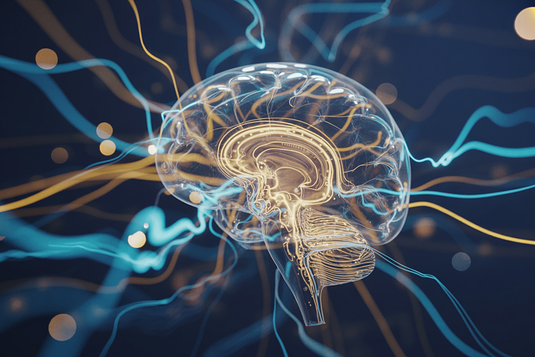
In the central part of the brain, between the left and right cerebral hemispheres, there is a structure that Anthony William calls the mid-brain canal. He describes it as a kind of energy corridor through which information is continuously exchanged between the two hemispheres.
Medical studies have not yet fully established the significance of this canal and its role in transmitting electrical and energy signals in the brain. This information exchange occurs via neurons and is essential for how the brain processes information and interacts with the world.
In children, this canal is naturally open and free. This allows for the rapid assimilation of new information, the development of imagination, intuition, and the ability to perceive reality in a way that often differs from that of adults.
Anthony William reveals that when toxic heavy metals like mercury and aluminum accumulate in this mid-brain canal, they begin to impede the normal transmission of signals between the two brain hemispheres. As a result, the brain is forced to adapt and seek alternative ways to process and transmit information.
This adaptation leads to the activation of brain areas that are not typically used so early in life. Nerve impulses begin to build new pathways and connections, and the brain adapts to the obstacles created by the accumulated metals.
Autism represents a more pronounced form of the same process. In autism, the amount of mercury and aluminum in the mid-brain canal is greater, and the accumulations are more complex. This is one reason why the manifestations of autism vary so much from child to child and why a broad autistic spectrum exists.
The differences in symptoms depend on both the quantity of toxic metals and their location in the brain. Besides accumulations in the mid-brain canal, smaller deposits scattered in other brain regions also play a significant role.
To illustrate this process, Anthony William uses an analogy with the Grand Canyon. There, numerous natural forces—water, air, sunlight, heat, and electrical charges—work together, creating a complex and dynamic system. If large quantities of metallic waste were dumped into this environment, everything would change. Air currents would be redirected, light would reach different places, and the overall dynamics of the system would be altered.
A similar process occurs in the brains of children with ADHD and autism. The brain adapts to the presence of toxic metals and begins to function differently, leading to behaviors and reactions that often seem unusual to others.
Specially Developed Neurons
Children with ADHD and autism also develop specific neural connections, especially in the frontal lobes of the brain.
These neurons support communication, intuition, and the ability to perceive information that goes unnoticed by most people. For this reason, many children with ADHD and autism possess exceptionally strong imaginations, creative abilities, and sensitivity to their environment.
At first glance, this might seem contradictory. Some children with ADHD or autism may appear withdrawn or distant from others. However, according to Anthony William, this is not always a lack of interest in people. In many cases, it is a way to cope with the enormous amount of information they continuously perceive from their surroundings.
Intense concentration on specific topics or interests can serve as a mechanism to protect against overload. Behind this behavior often lies an exceptionally active perception and heightened sensitivity to the emotions and moods of other people.
Besides the frontal lobes, these specialized neurons can also develop in other parts of the brain. They are more active and excitable, which is one of the reasons for the characteristic manifestations of ADHD.
In many children on the autistic spectrum, this process is even more pronounced. They develop a larger number of such adaptive neurons, contributing to both their unique abilities and the challenges they experience in daily life.
For this reason, their brains have an increased need for electrolytes, mineral salts, and glucose. If these nutritional elements are not available in sufficient quantities, the development and maintenance of new neural connections may become more difficult.
Age and Brain Development
The process of toxic heavy metal accumulation in the mid-brain canal and the subsequent adaptation of brain functions typically occurs in early childhood, most often by around four years of age.
Anthony William believes that during childhood, the brain possesses significant capacity for recovery and adaptation. If the accumulated toxic metals are gradually removed during this period, the child can retain their natural gifts and intuitive abilities, while simultaneously reducing many of the difficulties associated with ADHD or autism.
Here, Anthony William emphasizes that some behavioral characteristics, often perceived as symptoms, may actually represent habits and adaptation patterns developed in response to the challenges the brain has faced.
As we age, typically in early adulthood, the mid-brain canal between the two cerebral hemispheres gradually closes. This is a natural part of maturation and the shifting of focus to the responsibilities of adult life.
If toxic heavy metals are still present in the canal at this point, they can remain "locked" in this brain region. It is for this reason that many adults continue to experience manifestations of ADHD or autism in later stages of their lives.
Anthony William points out that ADHD and autism should not be viewed solely as limitations. According to him, many people with these conditions perceive the world differently and possess abilities that can be a tremendous advantage for themselves and for society as a whole.
Look for the continuation of the article “Anthony William’s Advice for Managing ADHD and Autism.”
Other important articles on the topic:
“The Truth About Attention-Deficit/Hyperactivity Disorder (ADHD) and Autism”